
Company Records • Montana Territory • 1881
The Iron Passage Company
Freight, passengers, mail, payrolls, machinery, and information—moved across a territory that could not afford to stand still.
The Iron Passage Stage and Freight Company operates a network of wagons, coaches, stations, warehouses, livestock, and permanent crews across Montana Territory. Before the railroad reaches the settlements it serves, the Passage is the line connecting them to the rest of the country.
Company History
Built to Cross the Territory
Iron Passage began with two men who understood that distance was the greatest obstacle in the West—and that whoever conquered it could shape everything that followed.
Miles Redding and Nathaniel Whitcomb built Iron Passage from a demanding regional hauling operation into a permanent network of routes, stations, warehouses, crews, livestock, and contracts. Their company did more than transport goods. It connected isolated settlements to markets, government, medicine, mail, and one another.
The partnership combined Redding’s determination and operational instinct with Whitcomb’s ability to turn opportunity into an organized enterprise. Together, they created a company capable of surviving weather, distance, competition, and the constant risk of moving valuable cargo through unsettled territory.
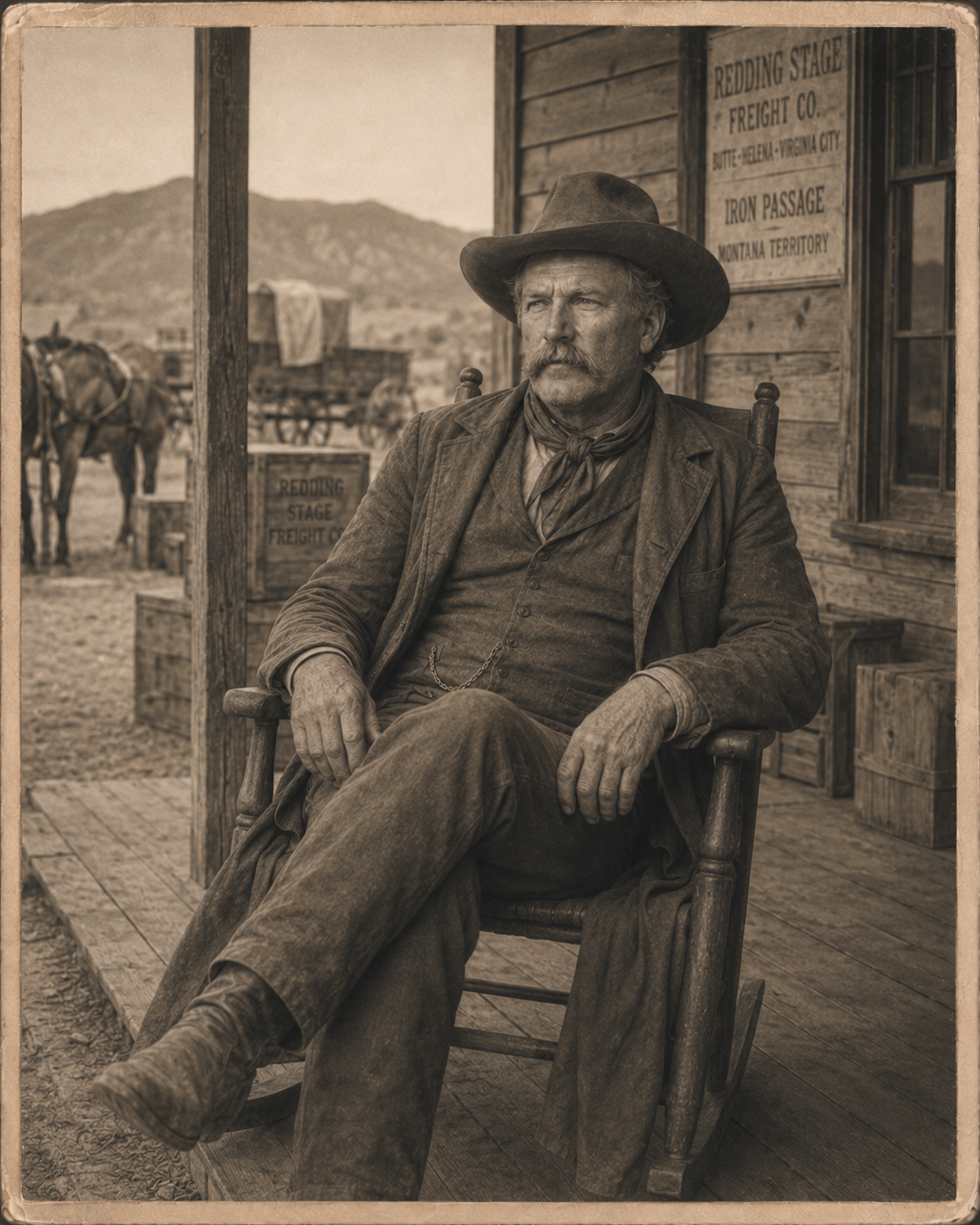
Founder and President
Miles Redding
Cofounder of the Iron Passage Stage and Freight Company
Miles Redding built his reputation by understanding what it took to move men, livestock, and freight through country that punished mistakes. He helped transform Iron Passage into one of the territory’s most important transportation operations.
A widower with no children, Miles now faces a problem that cannot be solved with another wagon, station, or contract. The company carries his name, his reputation, and much of his life—but he has no direct heir to inherit what he built.
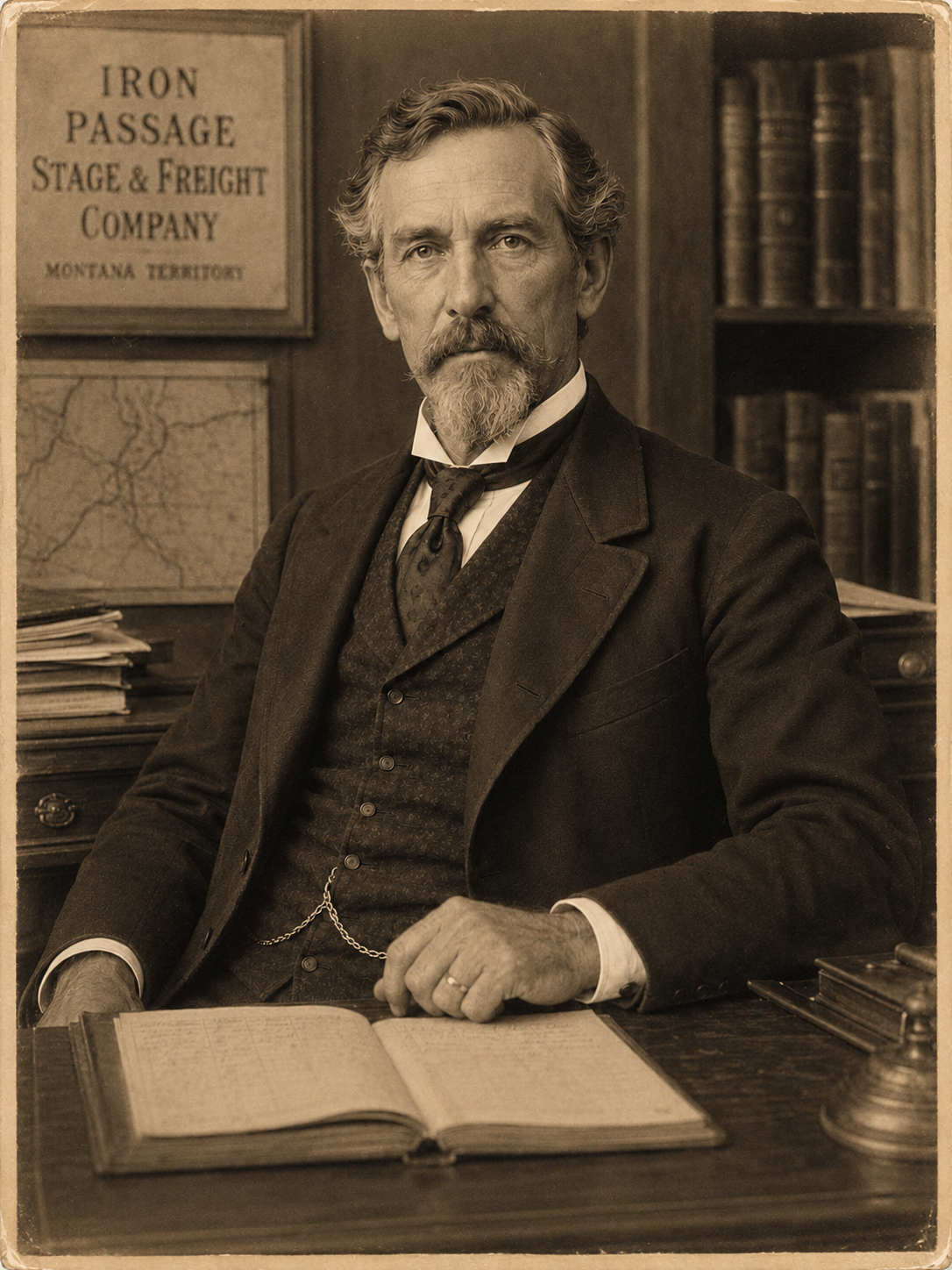
Cofounder
Nathaniel Whitcomb
Deceased approximately 1876
Nathaniel Whitcomb helped turn the founders’ early freight work into a structured company capable of operating across a growing territory. He understood that dependable routes required more than wagons and drivers. They required stations, schedules, records, contracts, trained employees, and disciplined management.
His death roughly five years before the opening of the series removed one of the company’s original architects. It also left his daughter carrying both the Whitcomb legacy and an established role inside Iron Passage.
The Founders’ Legacy
By 1881, Iron Passage is no longer simply a business created by two partners. It is a living organization whose employees, communities, and future are tied to decisions made years before.