
Six Novels • Montana Territory • 1881–1889
The Iron Passage Series
Six frontier novels about the company that helped move Montana before the railroad changed everything.
Across freight roads, mountain passes, stage stations, mining camps, territorial settlements, and an approaching railroad, the Iron Passage series follows the men and women fighting to keep a company alive while the West changes around them.
Iron Passage Stage & Freight Company
Six Books. One Changing West.
Beginning in 1881 and ending with Montana statehood in 1889, the Iron Passage series follows a powerful frontier transportation company through contract wars, impossible roads, ownership disputes, financial collapse, railroad expansion, and the fight to build a future without abandoning the people who made the company possible.

The Contract War
Iron Passage is prosperous, respected, and accustomed to setting the terms of transportation across Montana Territory.
When a major railroad-construction, territorial-mail, and government-supply contract becomes available, winning it could secure the company’s future for years. But a competing freight concern backed by wealthy merchants and territorial politicians intends to take the contract by any means necessary.
Routes are blocked. Stations are pressured. Wagons are sabotaged. As every failure brings Iron Passage closer to ruin, Jesse Holladay and the Passage Crew must complete a delivery no one expects them to survive.
Book OneThe Complete Series
The Iron Passage Saga
Each novel tells a complete frontier story while carrying Iron Passage closer to the railroad, Montana statehood, and a final decision about what the company is meant to become.
The Contract War
Iron Passage fights to win and fulfill the largest contract in its history while a politically connected rival attempts to make the company fail publicly.
The victory will make Iron Passage stronger—but it will also give the approaching railroad its first close look inside the company’s routes, costs, customers, and stations.
Buy on Amazon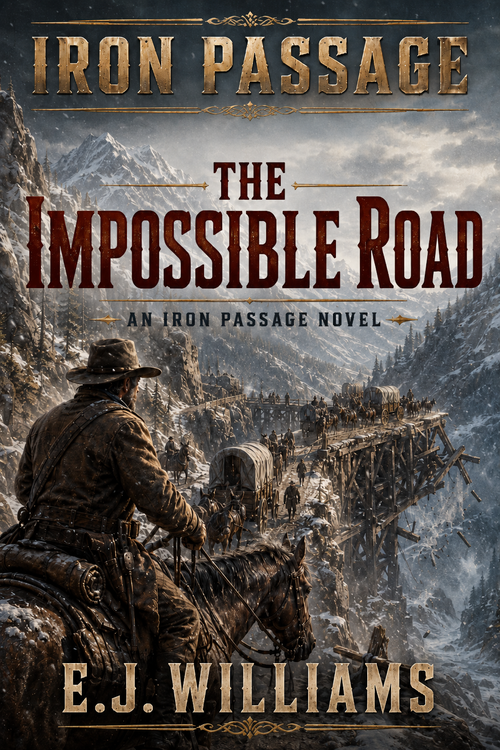
The Impossible Road
An operational disaster closes the primary route into the mountain country just as isolated settlements become dependent upon the largest freight movement in company history.
Jesse and the Passage Crew must open an alternate road through dangerous terrain while headquarters learns that authority on paper means little without the knowledge of the people who actually travel the country.
Buy on Amazon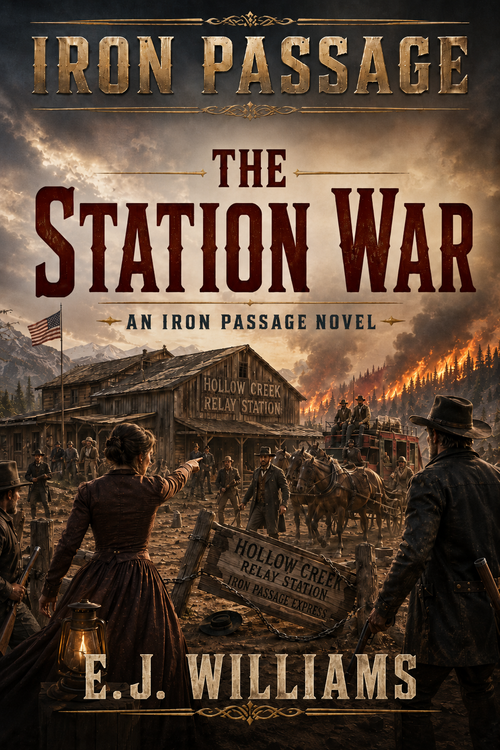
The Station War
As railroad expansion changes transportation patterns across Montana, Iron Passage moves to close or consolidate stations that may soon be bypassed.
Station families who built the buildings, supplied the animals, protected the mail, and maintained the roads refuse to surrender what they believe years of service have already earned.
Buy on Amazon
The Empty Ledger
A major mining district collapses while owing Iron Passage an enormous sum in freight bills, warehouse charges, supplies, and mercantile credit.
The company appears wealthy in its ledgers but lacks the money to meet its obligations. Saving Iron Passage may require destroying the communities that made it valuable.
Buy on Amazon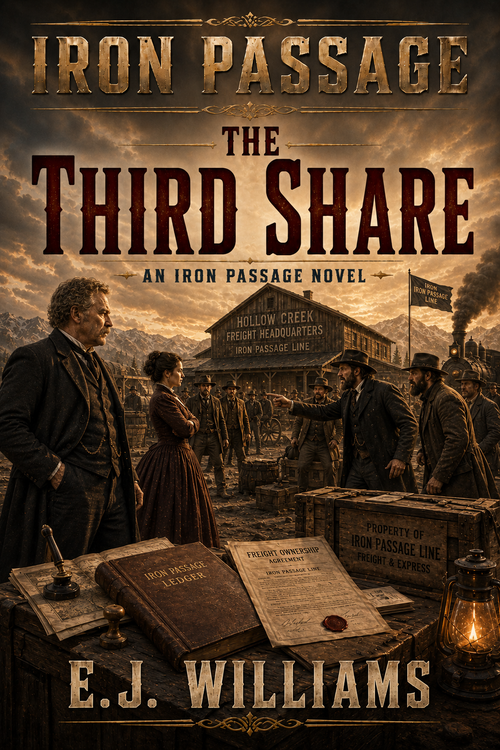
The Third Share
The railroad reaches the center of Iron Passage territory just as evidence emerges that a forgotten third partner may have a legitimate claim to the company.
While descendants, station families, employees, investors, and current owners fight over who truly owns Iron Passage, a railroad-backed syndicate begins acquiring the company piece by piece.
Buy on Amazon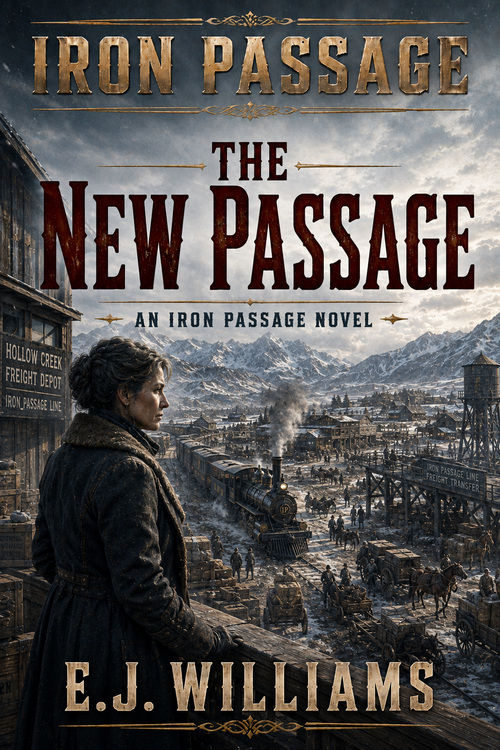
The New Passage
With the railroad dominating long-distance transportation, Iron Passage is offered a respectable ending: sell its stations, warehouses, contracts, and remaining routes.
Then a regional emergency exposes the limits of the new rail system. Iron Passage must mobilize every road, station, warehouse, team, and community relationship it possesses to prove that the railroad alone cannot connect Montana.
Buy on AmazonFrom Territory to Statehood
The West Does Not Stand Still
The railroad does not simply threaten Iron Passage. It forces the company to determine whether its purpose was ever truly tied to wagons, stages, and territorial roads.
By 1889, the old transportation monopoly will be gone. What remains will depend upon whether the people of Iron Passage can surrender control without surrendering the company itself.
Iron Passage survived not because it stopped change, but because it finally understood what deserved to survive.
The Passage Dispatch
Follow the Series
Receive book-release news, character profiles, company records, historical material, and stories from the world of Iron Passage.
Get Release Updates